

 1300 946 025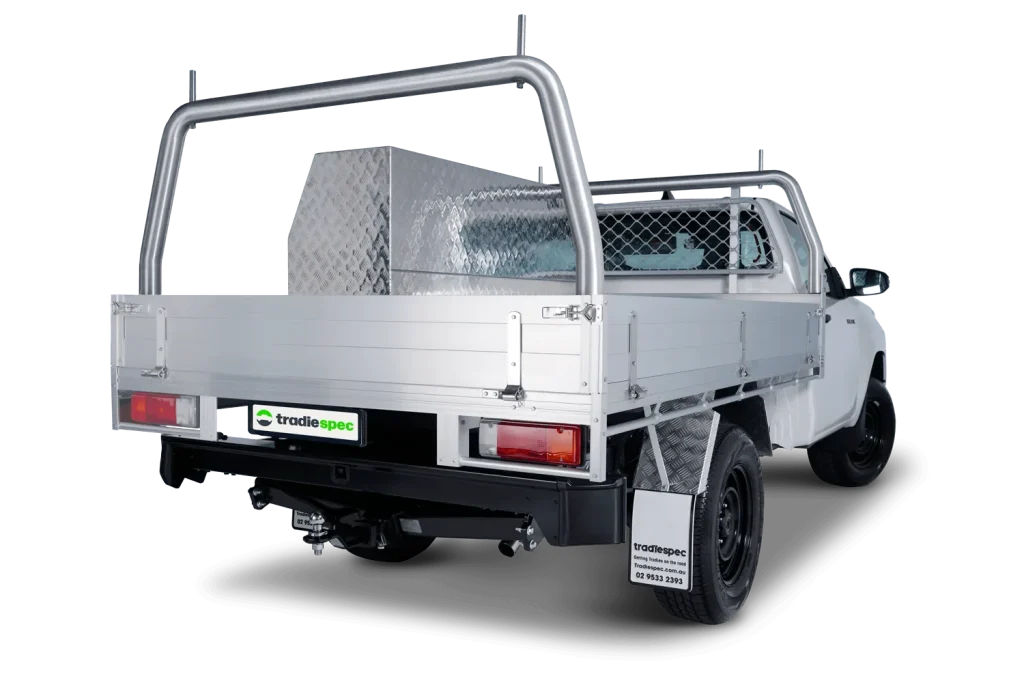
Key Points
- There isn’t one winner for every Aussie tradie. A plumber carrying tools and pipe has very different requirements from a brickie loading masonry or a landscaper moving heavy equipment.
- Aluminium ute trays are generally better if you want to keep vehicle weight down, preserve payload and reduce corrosion concerns.
- Steel trays make more sense when the tray regularly handles heavy, abrasive loads or cops hard impacts.
- Tradiespec supplies and configures work-ready utes for Australian tradies, including traybacks, toolboxes, ladder racks and tow bars, giving us practical experience with how tray choice affects the complete working vehicle.
Aluminium Vs Steel Ute Tray Comparison Table
| Factor | Aluminium/alloy tray | Steel tray |
| Weight | Lighter | Heavier |
| Payload | Usually leaves more capacity for tools and materials | Extra tray weight uses more available payload |
| Strength | Strong for its weight | Well suited to demanding, high-impact work |
| Corrosion | Naturally corrosion resistant | Requires coatings or galvanising for protection |
| Hard knocks | Can dent more easily under concentrated impacts | Generally better for repeated rough treatment |
| Cost | Varies by specification | Varies by specification; not always cheaper |
| Best for | Electricians, plumbers, maintenance and service trades | Builders, brickies and harsh material-handling work |
Aluminium vs Steel Ute Tray Weight
Weight is aluminium’s biggest advantage.
According to the Australian Aluminium Council, aluminium weighs roughly one-third as much as steel for an equivalent volume of material.
That doesn’t mean every aluminium ute tray weighs one-third as much as a steel equivalent. Different trays use different material thicknesses, profiles and reinforcement.
But aluminium gives manufacturers much more opportunity to build a lighter tray.
For tradies who regularly carry plenty of equipment, aluminium trays can also provide useful extra breathing room.
Tradie Tip: Compare the weight of the complete fitted vehicle, not just the tray. A lightweight tray covered in heavy toolboxes and accessories can still result in a heavy ute.
Which Is Stronger: Aluminium or Steel?
Steel generally has an advantage where repeated hard impacts and concentrated loads are part of the job.
Toyota Australia’s guidance, for example, positions steel tray bodies towards heavy-duty loads such as bricks and rocks, while alloy trays are associated with softer cargo.
That makes sense on site.
If you’re regularly dropping or dragging masonry, demolition equipment or dense landscaping gear across the tray, steel may be worth the extra weight.
Aluminium’s advantage is its strength-to-weight ratio. A well-designed aluminium tray can still handle demanding trade use while weighing considerably less.
So the decision comes down to how much toughness your work genuinely requires.
If the harshest thing your tray normally carries is a toolbox and six lengths of conduit, you probably don’t need to drive around with more tray weight than necessary.
Which Tray Is Better for Rust and Corrosion?
Aluminium has a clear natural advantage here.
When aluminium is exposed to oxygen, it forms a protective oxide layer. This gives it good natural corrosion resistance.
It can still corrode under certain conditions, so describing aluminium as completely corrosion-proof would be going too far.
Steel needs additional protection because exposed carbon steel can rust.
Quality steel trays may therefore use:
- galvanising
- zinc protection
- paint, or
- powder coating.
For tradies working near the coast, around moisture or in muddy environments, corrosion protection deserves consideration whichever material you choose.
Tradie Tip: Wash off salt, mud, chemicals and fertiliser residue. On steel trays, check scratches or damaged coatings before rust gets established.
Is Aluminium More Expensive Than Steel?
Not necessarily.
Tray pricing depends on:
- size
- vehicle model
- construction
- heavy-duty versus economy specification
- finish
- headboard
- dropsides
- installation, and
- accessories.
That doesn’t mean alloy is always cheaper.
It means tradies should compare like-for-like fitted prices rather than assuming steel is the budget option.
Which Tray Is Best for Different Tradies?
Electricians
Usually aluminium.
Electricians often carry tools, cable, conduit, ladders and parts rather than extremely dense bulk loads.
A lighter tray can leave more available payload for toolboxes and stock.
Plumbers
Usually aluminium for general plumbing work.
Pipe, fittings, jetters, pumps and toolboxes can quickly add weight.
Aluminium can help keep the base vehicle setup lighter.
Builders and carpenters
Depends on the work.
Aluminium can suit timber, sheets, ladders and general equipment.
Steel becomes more attractive if the tray regularly carries demolition gear, masonry or other harsh loads.
Bricklayers and concreters
Often steel.
Repeated loading of bricks, concrete equipment and heavy materials is exactly where steel’s resistance to hard knocks can justify the additional mass.
Lawn mowing and landscaping businesses
Depends on the load.
Mowers, blowers and hand tools can suit aluminium well.
If the ute regularly handles dense materials, machinery or rough landscaping equipment, steel may be worth considering.
Don’t Forget Toolboxes, Canopies and Ladder Racks
Tray material is only one part of your setup.
Before deciding between steel and aluminium, list everything that will permanently live on the vehicle.
That might include:
- lockable toolboxes
- ladder racks
- trundle drawers
- water tanks
- tow gear, and
- a full canopy.
Every addition affects vehicle weight.
This is also a useful point to compare which accessories to add to your tradie vehicle, particularly if you’re building a completely new work setup.
If you’re not sure whether you need an open tray at all, compare a ute vs van for your trade before committing.
Check Load Restraint and Vehicle Limits
Whatever tray you choose, your load still needs to be properly secured.
The National Transport Commission’s Load Restraint Guide provides guidance for light vehicles including utes and vans.
A heavy-duty tray doesn’t make an unsecured load safe.
You should also check your vehicle’s:
- Gross Vehicle Mass
- axle limits
- tray and accessory weight, and
- actual loaded working weight.
If your setup includes a canopy, drawers, racks and plenty of tools, getting the vehicle weighed can be far more useful than guessing.
Aluminium vs Steel Ute Trays: The Verdict
Choose aluminium if your priorities are:
- lower tray weight
- preserving payload
- corrosion resistance
- carrying tools and general trade equipment, and
- adding toolboxes or other accessories.
Choose steel if your priorities are:
- regular heavy impacts
- carrying dense or abrasive materials
- maximum stiffness, and
- durability under particularly harsh loading.
For plenty of plumbers, electricians and service tradies, aluminium will be the more practical everyday option.
For brickies, concreters, builders and other trades that regularly punish the tray, steel can be worth carrying the extra weight.
The smartest tray isn’t automatically the toughest one. It’s the one that does the job without adding weight or cost you don’t need.
Tradiespec offers work-ready single and dual-cab utes with trade-oriented tray and accessory setups. Talk to our team today to see how we can get your business on the road.
Disclaimer
The information in this article is general in nature and does not constitute financial, legal, engineering or vehicle-compliance advice. Vehicle specifications, tray weights, prices, load limits and rental or Rent-to-Own terms can change.
Tradiespec Expert

At Tradiespec, our mission is to help tradies across Australia with insights and advice to drive your business forward. Whether it’s tips on vehicle selection, how to manage your fleet or insurance information, we’ve got you covered.
