

 1300 946 025
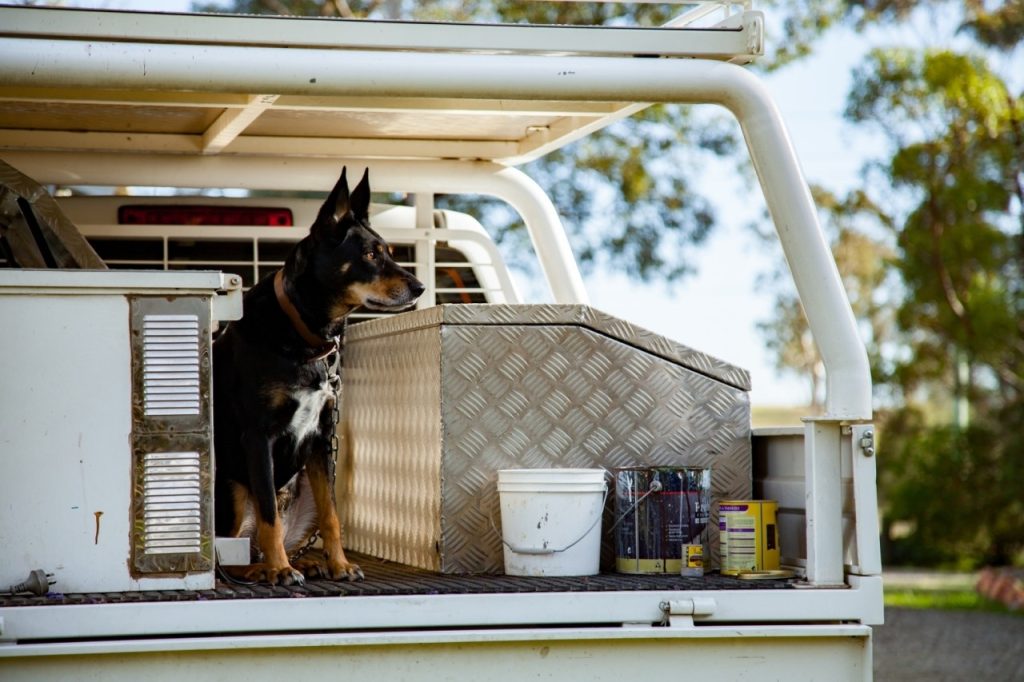
Your work ute might have a 1,000kg payload capacity, but that doesn’t mean you can load a tonne of tools and materials into the tray.
Once you factor in passengers, toolboxes, ladder racks and other accessories, your available payload can shrink quickly.
Understanding your ute’s weight limits is important for staying safe, avoiding overloading and choosing a vehicle that can handle your everyday work.
Here’s how to calculate what your ute can actually carry.
What Is Ute Payload?
Payload is the maximum weight a vehicle can carry on top of its kerb weight, including people, tools, materials and fitted accessories.
It’s calculated using two figures:
Payload = Gross Vehicle Mass (GVM) − Kerb Weight
For example, if your ute has:
- A GVM of 3,200kg
- A kerb weight of 2,200kg
Your maximum payload is 1,000kg.
However, that doesn’t mean you’ve got 1,000kg available for tools and materials. Everything added to the vehicle counts towards that limit.
What Counts Towards Your Ute’s Payload?
It’s easy to underestimate how much weight you’re carrying, particularly when your ute is fitted out for work.
Your payload needs to account for:
- Driver and passengers: Everyone travelling in the vehicle.
- Tools and materials: From power tools and toolboxes to timber, pipes and building supplies.
- Accessories: Trays, canopies, ladder racks, bull bars and storage systems that aren’t included in the kerb weight.
- Additional equipment: Water tanks, compressors, generators and other gear.
- Tow ball weight: The downward weight transferred from a connected trailer onto your ute.
Even accessories that stay permanently fitted to your vehicle reduce its available carrying capacity.
For cab-chassis utes, it’s particularly important to check whether the published kerb weight includes the tray body.
How Much Payload Do You Actually Have Left?
Let’s look at a hypothetical dual-cab work ute with a maximum payload of 1,000kg.
| Item | Weight |
| Starting payload | 1,000kg |
| Tray, toolbox and ladder racks | −180kg |
| Driver | −85kg |
| Passenger | −75kg |
| Tools and equipment | −250kg |
| Trailer tow ball download | −150kg |
| Remaining payload | 260kg |
In this example, only 260kg remains available for additional materials or equipment.
And that’s before accounting for any other items that weren’t included in the vehicle’s original kerb weight.
These figures are illustrative. Actual weights and limits depend on the specific vehicle and equipment.
GVM vs GCM: What’s the Difference?
Two terms you’ll regularly come across when checking vehicle specifications are GVM and GCM.
GVM (Gross Vehicle Mass) is the maximum permitted weight of your ute when fully loaded. It includes the vehicle itself, passengers, tools, accessories and cargo.
GCM (Gross Combination Mass) is the maximum permitted combined weight of your ute and any trailer it’s towing, including their loads.
For example, a ute might have a maximum braked towing capacity of 3,500kg. However, that doesn’t automatically mean you can tow 3,500kg while also loading the ute to its maximum GVM.
You need to stay within the vehicle’s GVM, GCM, towing and axle limits, along with the relevant trailer and towbar ratings.
How to Check If Your Work Ute Is Overloaded
Before loading up for your next job:
- Find your vehicle’s specifications. Check the manufacturer’s information or owner’s manual for its GVM, payload and axle limits.
- Account for your fit-out. Include fitted trays, toolboxes, racks, canopies and other accessories.
- Add your usual working load. Consider passengers, tools, materials and any trailer tow ball weight.
- Weigh your loaded vehicle. A public weighbridge can help you check its actual weight. Individual axle weights may also need checking.
Don’t rely solely on how much space is available in the tray. A ute can look comfortably loaded while exceeding its weight limits.
What If Your Ute Doesn’t Have Enough Payload?
If you’re regularly approaching your ute’s weight limit, consider whether your current vehicle setup is suitable.
A lighter aluminium tray may free up some capacity compared with a heavier steel alternative. You can explore the differences in our aluminium vs steel ute tray guide.
Alternatively, a different cab configuration, a ute with a higher payload rating or a light-duty truck may be more appropriate for your work.
The important thing is to choose a vehicle based on what you actually need to carry, rather than its advertised towing capacity or tray size alone.
Get a Work Vehicle That Can Handle the Load
Whether you’re carrying tools between jobs or transporting heavier equipment, your vehicle needs to be suited to the work you do.
Not sure which vehicle suits your load requirements? Speak to our team today to discuss FlexiRent or Rent-to-Own options that meet your business needs.
Tradiespec Expert

At Tradiespec, our mission is to help tradies across Australia with insights and advice to drive your business forward. Whether it’s tips on vehicle selection, how to manage your fleet or insurance information, we’ve got you covered.
