

 1300 946 025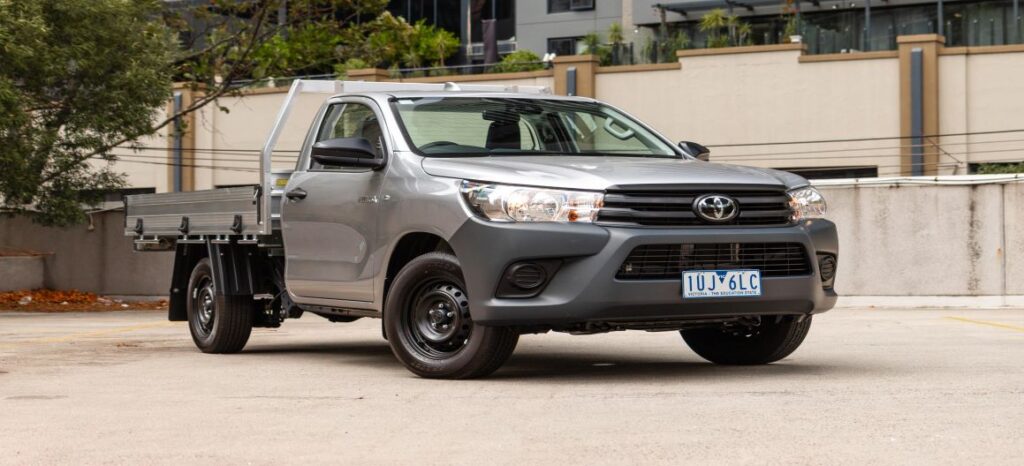
Key Takeaways
Choose a 4×2 if most of your work is on sealed roads and established sites. Consider a 4×4 if mud, loose surfaces, rural properties or difficult site access are a regular part of the job.
Payload and towing capacity vary between models and variants, so check the actual vehicle specifications before deciding.
Tradiespec supplies work-ready utes to Australian trade businesses through flexible rental and Rent-to-Own options. Our vehicles can be configured with equipment such as trays, toolboxes, ladder racks and tow bars, giving our team practical experience matching utes to different jobs and working conditions.
What Does 4×2 vs 4×4 Mean?
A 4×2 ute has four wheel positions, with power delivered to two wheels, usually the rear wheels.
A 4×4 ute can send power to all four wheels, providing additional traction on loose, slippery or uneven surfaces.
If you searched for “2×2 vs 4×4 utes”, 4×2 is the usual term for a two-wheel-drive ute.
4×2 vs 4×4: Quick Comparison
| What matters | 4×2 ute | 4×4 ute |
| Metro and suburban work | Usually a good fit | Capable |
| Sealed roads | Excellent | Excellent |
| Muddy or soft sites | More limited | Better suited |
| Rural and unsealed access | Depends on conditions | Better suited to difficult access |
| Purchase or hire cost | Generally lower | Generally higher |
| Fuel use | Can be lower | Can be higher |
| Payload | Variant dependent | Variant dependent |
| Towing capacity | Variant dependent | Variant dependent |
When Does a 4×2 Make Sense?
A 4×2 is worth considering if you spend most of the week on bitumen, visit sites with reliable access and rarely deal with mud or steep, loose surfaces.
That makes a 4×2 a practical starting point for many:
- Plumbers
- Electricians
- HVAC technicians
- Commercial maintenance teams
- Couriers and service technicians
Builders and carpenters may also find a 4×2 suitable where sites have formed vehicle access.
Tradie Tip: Think about the conditions you face during a normal month, rather than the roughest job you might visit once a year.
When Is a 4×4 Worth It?
Extra traction becomes valuable when poor access can delay the job.
A 4×4 is worth considering if you regularly work on:
- Muddy construction sites
- Farms and rural properties
- Unsealed roads
- Undeveloped blocks
- Steep or loose access tracks
- Civil or infrastructure projects
Landscapers, rural contractors and fencing crews are more likely to benefit from 4WD, particularly when carrying or towing equipment across low-grip surfaces.
What About Payload and Towing?
Two common assumptions are that 4×2 utes always carry more and 4×4 utes always tow more. Neither is a reliable rule.
Four-wheel-drive hardware can add vehicle weight, but payload also depends on the cab, body, GVM and fitted equipment.
Ford’s current Ranger XL specifications show the importance of comparing variants. Several Ranger XL 4×2 and 4×4 configurations are rated to tow up to 3,500kg braked, while their listed payloads vary significantly by configuration.
Toyota’s 2026 HiLux range provides another example. As of September 2026, Toyota lists 2,900kg braked towing for relevant 4×2 HiLux variants and 3,500kg for 4×4 variants.
Before hiring a work ute, check:
- Payload
- GVM
- GCM
- Braked towing capacity
- Weight of your tray, tools and accessories
A toolbox, canopy, ladder rack, passengers and other gear all use part of the available payload.
Which Is Better for Your Trade?
| Typical work | Good starting point |
| Metro plumber or electrician | 4×2 |
| Commercial maintenance | 4×2 |
| Builder or carpenter | Depends on site access |
| Lawn mowing | Depends on property access |
| Landscaping | Often 4×4 |
| Rural fencing | 4×4 |
| Civil / infrastructure | Often 4×4 |
For a broader vehicle checklist, see Top Tips to Consider When Hiring a Ute. You can also compare the Most Popular Utes in Australia in 2026 when researching models.
Choosing the Right Work Ute
Start with three questions:
- Where will the ute spend most of its time?
- What will you regularly carry or tow?
- Does poor traction currently cost you time on jobs?
As a member of our sales team puts it:
“When helping a tradie choose between a 4×2 and a 4×4, I focus on three core questions: Do you drive on unsealed roads or off-road sites? Do you need serious towing capacity? And what is your target budget? Answering those gives us a clear picture of whether you need the extra traction of a 4×4 or the lower running costs of a 4×2.”
For mainly road-based work, a suitable 4×2 can keep vehicle costs lean while covering everyday requirements. Regular mud, rural access or difficult terrain gives 4×4 a much stronger business case.
At Tradiespec, we offer work-ready utes through FlexiRent and Rent-to-Own, with vehicle configurations available for different trade requirements.
If you’re considering expanding your current fleet or have an upcoming big job, talk to our team today.
Tradiespec Expert

At Tradiespec, our mission is to help tradies across Australia with insights and advice to drive your business forward. Whether it’s tips on vehicle selection, how to manage your fleet or insurance information, we’ve got you covered.
