

 1300 946 025
Australia’s blue-collar gold rush is creating serious opportunities for skilled tradies. A long-running skills shortage is colliding with record construction activity, the renewable energy transition, major technology investment and an ageing workforce.
In a recent TikTok video, Tradiespec Founder Tim highlighted five macrotrends showing why 2026 could be one of the best times in decades to be a tradie in Australia.
1. Australia has a structural trade shortage
The shortage of qualified tradies is not a temporary problem caused by one busy construction cycle. It has developed over many years because Australia has not trained enough workers with the right skills to match demand.
Jobs and Skills Australia found that Technicians and Trades Workers accounted for 51% of all occupations experiencing persistent shortages between 2021 and 2025.
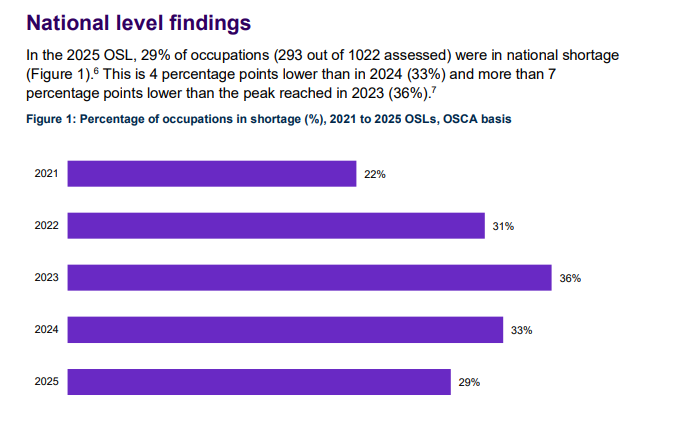
Jobs and Skills Australia – 2025 Occupation Shortage List – Key Findings Report
Almost one in two trade occupations remained in shortage in 2025, particularly across construction, engineering, automotive and clean energy-related roles.
Employers are also still struggling to fill skilled roles.
In June 2025, the vacancy fill rate for Skill Level 3 occupations—which includes many qualified trade roles—was only 55.1%.
For experienced tradies, this can mean:
- More choice over the jobs you accept
- Greater bargaining power when quoting or negotiating
- Stronger opportunities to specialise
- More potential to start or expand your own trade business
Tradie Tip: Being busy is not the same as being profitable. Track your labour, materials, travel time and vehicle costs before taking on extra work.
2. A $1.14 trillion construction pipeline is in front of us
Infrastructure Australia estimates that its database captures $1.14 trillion in construction activity between 2024–25 and 2028–29. This covers public infrastructure, housing, private developments, mining, defence and road maintenance.
Within that total, Australia’s five-year Major Public Infrastructure Pipeline has reached a record $242 billion, including:
- $129 billion in transport infrastructure
- $77 billion in buildings
- $36 billion in utilities infrastructure
Investment is being driven by housing, hospitals, transport upgrades and new electricity transmission projects.
Queensland will also see years of work connected to the Brisbane 2032 Olympic and Paralympic Games. The Games Venues Infrastructure Program includes $7.1 billion for 17 new and upgraded venues, including a new Brisbane Stadium and National Aquatic Centre.
These large projects create direct work for civil contractors and construction trades. They also create flow-on demand for maintenance, fit-outs, logistics, landscaping, security systems and local subcontractors.
3. The renewable energy transition needs tradies
Australia’s shift towards renewable energy is no longer just a future ambition. It is backed by government targets, funding programs and major private investment.
The Australian Government is targeting 82% renewable electricity by 2030. Its Capacity Investment Scheme is intended to help deliver an additional 40 gigawatts of renewable generation and storage capacity by the end of the decade.
That means more work involving:
- Solar farms and rooftop solar
- Battery storage systems
- Wind farms
- Transmission lines
- Substations and grid connections
- Building electrification and EV charging
Research produced for the Australian Energy Market Operator previously estimated that the electricity workforce would need to grow from around 21,500 to 59,300 workers in five years.
Construction roles dominate the early stages, with particularly strong demand expected for electricians, mechanical trades and electrical engineers.
This transition will not only need workers to build new projects. Tradies will also be required to inspect, repair, upgrade and maintain the assets for decades.
4. AI is creating physical construction work
Artificial intelligence might sound like a white-collar technology story, but AI relies on a huge amount of physical infrastructure.
Data centres require large buildings, reliable power supplies, cooling equipment, backup systems, fire protection and around-the-clock maintenance. That creates work for electricians, plumbers, HVAC technicians, refrigeration mechanics, concreters, steel workers and other specialised contractors.
Westpac economists estimate that Australia’s data centre investment pipeline could exceed $155 billion. They expect much of the early economic activity to come from constructing the buildings and supporting infrastructure, with the investment temporarily supporting hundreds of thousands of jobs across the wider economy as it rolls out.
The Australian Government has also reported that companies announced more than $100 billion in potential Australian data centre investments between 2023 and 2025.
Australia’s available land, renewable energy resources and stable operating environment make it an attractive location. However, none of these facilities can operate without skilled people on the tools.
5. Experienced workers are retiring faster than they can be replaced
The workforce is ageing, and many experienced tradies will leave the industry over the coming years. At the same time, Australia needs more workers to deliver its housing, energy and infrastructure plans.
BuildSkills Australia estimates that the construction, property and water sectors will need 22% more workers by 2028. It identifies Australia’s ageing population and shrinking labour pool as major workforce challenges.
There has been some encouraging growth in new trade apprentices during individual quarters. However, NCVER data shows trade apprenticeship commencements were still down 4.2% across the 12 months to December 2025. Jobs and Skills Australia expects employment among Technicians and Trades Workers to grow by another 195,800 people by 2035.
This creates a major opportunity for qualified tradies, but also a responsibility to train apprentices, pass on practical knowledge and build businesses that can continue operating as senior workers step away.
Getting Your Business on the Road
Take advantage of the opportunity without tying up your cash flow.
Demand is strong, but tradies still face rising operating costs, unpredictable workloads and expensive vehicles. A reliable ute or van is essential, but buying one outright can lock away cash that may be needed for tools, materials, wages or growth.
Tradiespec helps Australian tradies get on the road with practical commercial vehicle options.
Whether you need an extra ute for a new contract or a long-term vehicle for your growing business, Tradiespec can help you stay mobile without unnecessary downtime. Enquire now about your short-term and long-term commercial vehicle hire requirements.
Tradiespec Expert

At Tradiespec, our mission is to help tradies across Australia with insights and advice to drive your business forward. Whether it’s tips on vehicle selection, how to manage your fleet or insurance information, we’ve got you covered.
