

 1300 946 025
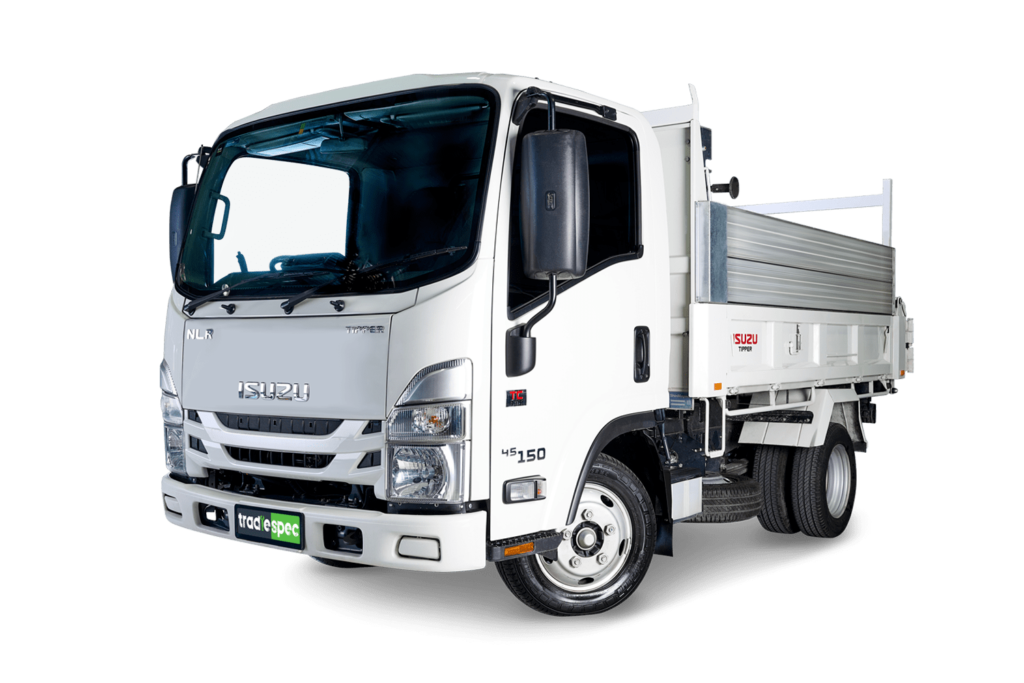
A work ute can handle plenty, but there comes a point when you might need something with more carrying capacity.
Maybe you’re making multiple trips to transport materials, your equipment is getting heavier, or you’ve started taking on bigger projects.
If your ute is struggling to keep up, a light truck could be worth considering.
Here are five signs it might be time to make the switch.
1. You’re Regularly Running Out of Payload
One of the clearest signs you’ve outgrown your ute is regularly approaching its maximum payload.
Payload includes everything added to the vehicle beyond its specified kerb weight, including tools, materials, passengers and accessories.
A heavy steel tray, toolbox and ladder racks can take up a considerable portion of that allowance before you’ve even loaded materials for the day.
If you’re constantly having to split loads or leave equipment behind to stay within the vehicle’s limits, it may be time to consider a different setup.
Light trucks can offer greater carrying capacity, depending on the model and configuration.
The important thing is to compare the actual payload figures rather than vehicle size alone.
2. You’re Making Too Many Trips to Transport Materials
For some trades, space can be just as important as weight.
Landscapers regularly transporting soil, mulch or green waste may benefit from a tipper truck, while builders and contractors carrying larger materials might need a longer tray or a more specialised body.
If your team is spending valuable working time making repeated trips between suppliers and job sites, a vehicle with a larger load area could help.
However, don’t assume a larger tray automatically means you can carry more weight. Check both the available space and the vehicle’s payload rating.
3. Your Equipment Needs Have Changed
As your business takes on different work, your vehicle requirements can change too.
A ute that was suitable when you started out may no longer accommodate the tools, equipment or materials you now carry.
For example:
- Landscapers may need a tipper configuration for transporting loose materials.
- Builders may require a larger tray for equipment and supplies.
- Contractors may need additional storage compartments and load-securing options.
- Maintenance teams may benefit from a truck fitted with a trade-specific body.
Before upgrading, consider whether a different ute configuration could solve the problem.
If it can’t, a light truck may give you more flexibility.
4. You’re Taking On Bigger Jobs
Larger projects often involve more materials, equipment and people moving between sites.
If your existing vehicle regularly limits how much work you can carry out efficiently, it may be worth reassessing your transport requirements.
Think about how often you’ll need the extra capacity.
If you’re handling an occasional larger job, hiring a suitable vehicle for that project may be more practical than permanently changing your setup.
But if heavier loads and larger deliveries have become part of your everyday work, a light truck could make more sense.
5. You’re Ready for a More Specialised Setup
A light truck isn’t necessarily just a bigger ute.
Depending on the model, you may have access to configurations such as:
- Tipper bodies for moving and unloading loose materials.
- Trade packs with trays, toolboxes and ladder racks.
- Larger trays suited to bulky equipment and supplies.
- Specialised bodies designed for particular industries or tasks.
The right configuration can make loading, unloading and organising equipment easier.
It’s worth thinking about how your team works throughout the day, not just how much your vehicle can carry.
Do You Need a Truck Licence?
Not necessarily.
In Australia, a standard Class C car licence generally allows you to drive eligible vehicles with a Gross Vehicle Mass (GVM) of up to 4.5 tonnes.
For rigid trucks above 4.5 tonnes GVM, you’ll need the appropriate heavy vehicle licence.
Some light truck models are available in 4,495kg GVM configurations, which may allow them to be driven on a standard car licence.
Always check the exact vehicle’s GVM and licence requirements before assigning it to a driver.
Is a Light Truck the Right Choice for Your Business?
Before making the switch, consider:
- How much weight you regularly carry
- Whether your current tray or tub is large enough
- How often you transport bulky materials
- Whether a tipper or specialised body would help
- Where you’ll park and operate the vehicle
- The running costs and licence requirements
A larger vehicle isn’t always the best solution.
If your existing ute meets your daily requirements, there may be no reason to change. But if it’s limiting the work you can take on, upgrading could be a practical investment in your business.
Explore Work-Ready Trucks with Tradiespec
At Tradiespec, we offer work-ready vehicles for businesses of different sizes, including Isuzu N Series and Hino 300 trucks in selected configurations.
With FlexiRent and Rent-to-Own options, we can help you explore a vehicle that suits your workload without needing to purchase it outright.
Need more carrying capacity? Explore our light truck options or speak to our team about your requirements.
Tradiespec Expert

At Tradiespec, our mission is to help tradies across Australia with insights and advice to drive your business forward. Whether it’s tips on vehicle selection, how to manage your fleet or insurance information, we’ve got you covered.
